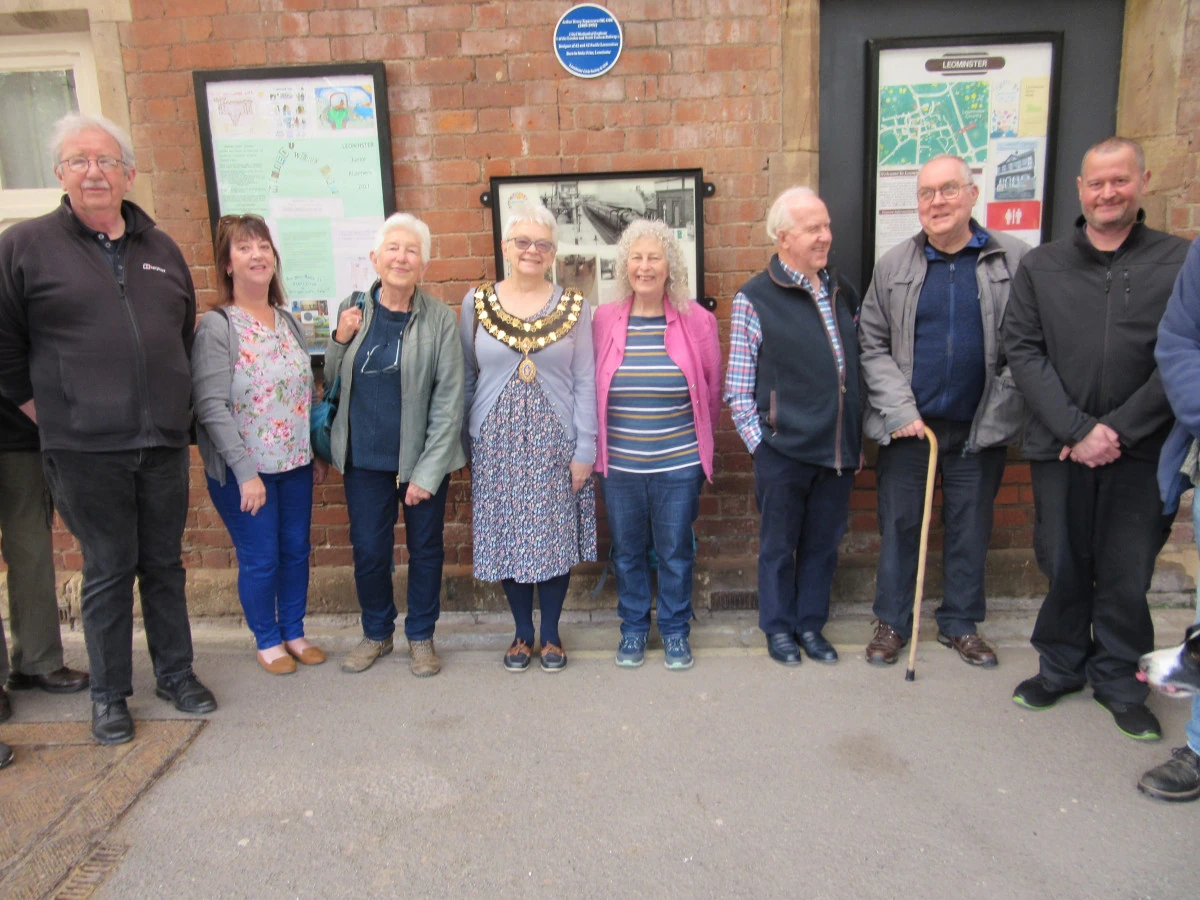
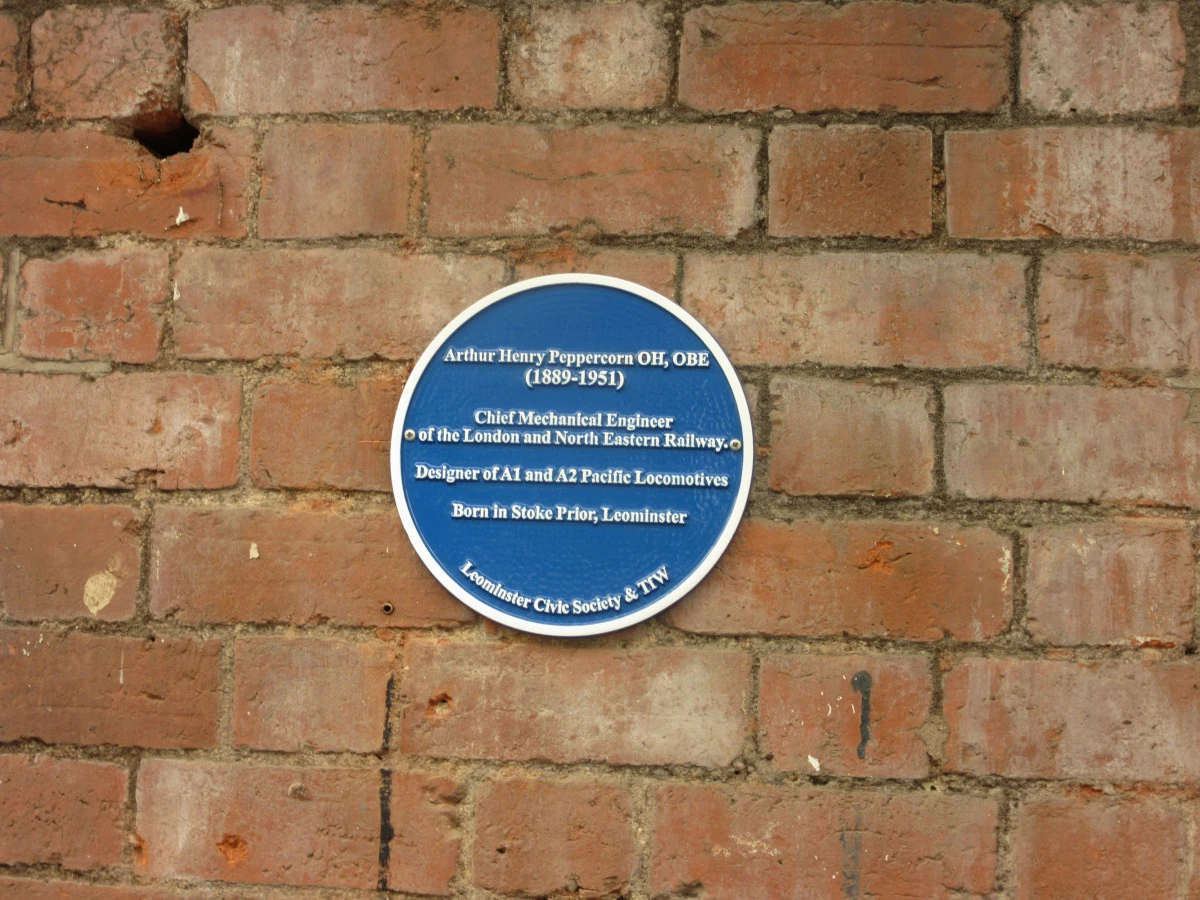
The story of this Blue Plaque started when Mike Dowding contacted the Civic Society suggesting a plaque ought to be erected to commemorate Arthur Peppercorn. We agreed to fund the plaque and then looked for a site for it. The obvious place was the railway station so we approached Transport for Wales (TfW). It was a slow process although TfW were always positive. Eventually we had agreed a site and they agreed to erect the plaque free of charge. This happened at the beginning of April and it was “unveiled” by the Mayor of Leominster, Gill Murdoch, on 25th April 2025.
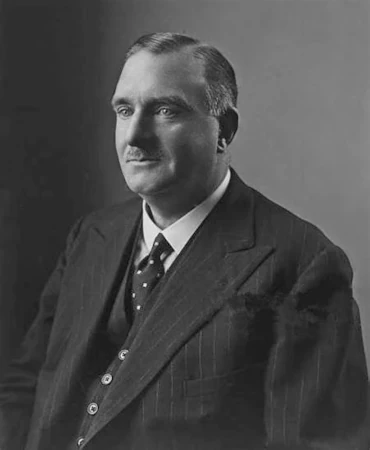
Arthur Peppercorn was born on 29th January 1889 in Stoke Prior near Leominster. He was the son of a clergyman who hoped his son would follow him into the church. He was educated at Hereford Cathedral School. Rather than the church, he started his career as an apprentice with the Great Northern Railway (GNR) at Doncaster in 1905.
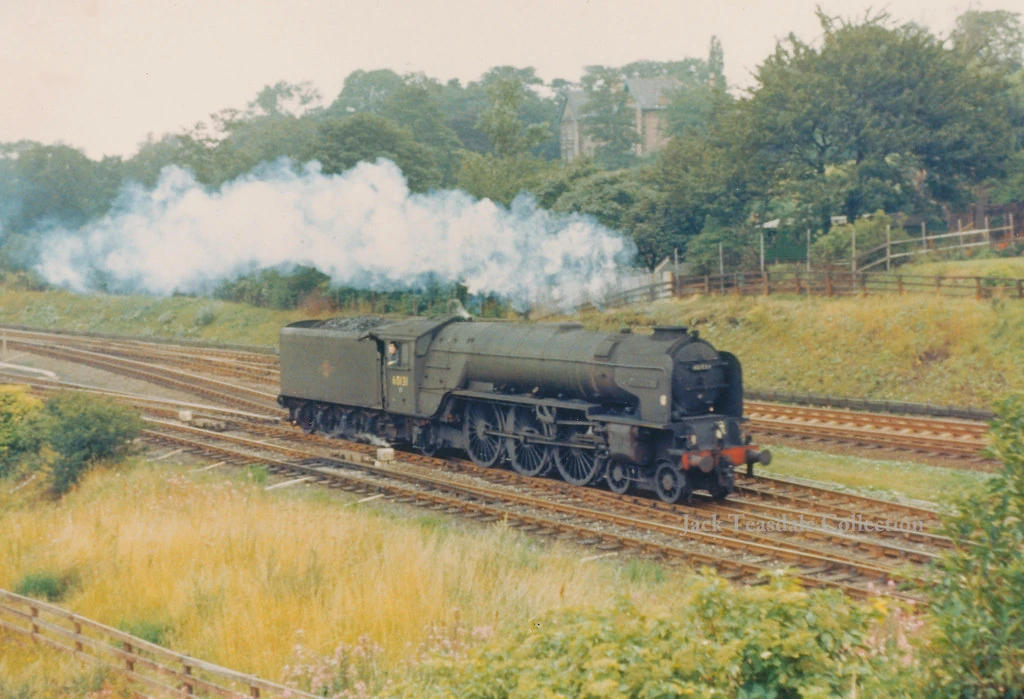
He succeeded Edward Thompson as Chief Mechanical Engineer on 1st July 1946, the final Chief Mechanical Engineer of the London, North Eastern Railway (LNER) on 1st July 1946, quite late in his career, so he was to be at the pinnacle of Doncaster engineering only from 1946 to the end of 1949. In this short time he left his mark in a very positive way by improving on Thompson’s design for a Pacific engine which became the Peppercorn class A2 Pacific. Pacific engines were 4-6-2 engines, meaning they had the wheel arrangement of four leading wheels on two axles, six powered and coupled driving wheels on three axles and two trailing wheels on one axle. The final Peppercorn design became the A1 class Pacifics. These renowned locomotives have been called the finest express passenger locomotives to run in this country. He retired at the end of 1949, two years after nationalisation, dying in 1951 in Doncaster.
Only one of his famous Pacific locomotives, an A2, 60532 Blue Peter, was preserved.
No A1s were preserved. However, a brand new example, 60163 Tornado, was built as the next in the class. It moved under its own steam for the first time in August 2008.